
Parent Skills
How to Build a Bedtime Routine That Actually Works
8 min read · Updated September 2026 · Medically reviewed by Dr. Art Davis, MD
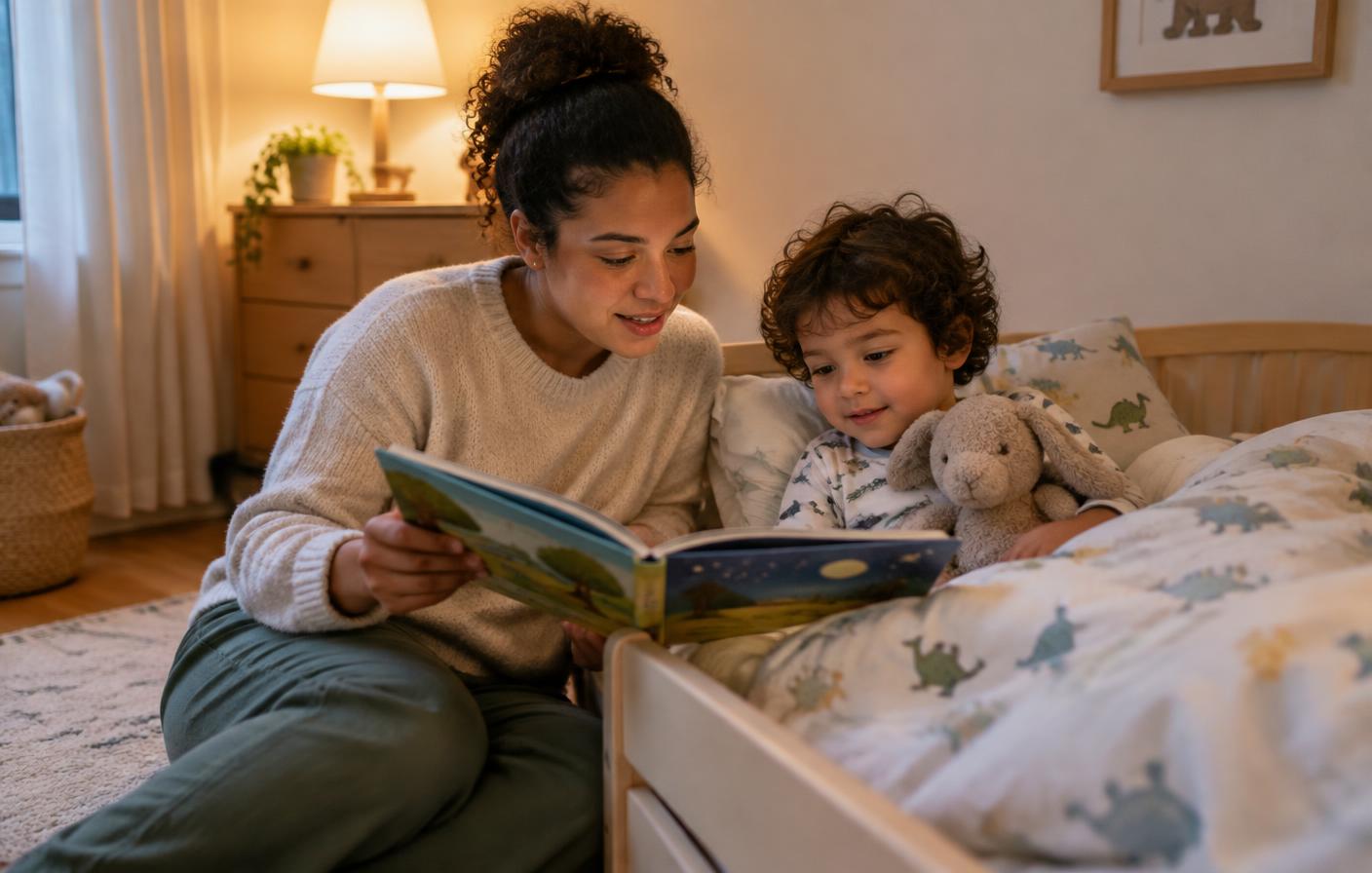
A bedtime routine does not need to be elaborate. It needs to be short enough to repeat, calm enough to lower stimulation, and predictable enough that your child knows what comes next. Build the sequence once, then practice it consistently for two weeks before judging it.
Step 1: Choose a realistic lights-out time
Work backward from when your child needs to wake and the amount of sleep appropriate for their age. Start the routine about 30 minutes before lights out. If bedtime is currently much later, shift it earlier by 15 minutes every few nights rather than making one dramatic jump.
Step 2: Close the day before the routine begins
Finish energetic play and screens at least 30 to 60 minutes before bed. Dim the room, offer the final snack or drink if needed, and give a clear transition cue: 'Ten minutes, then we start bedtime.'
Step 3: Use the same short sequence
Pick three to five steps and keep their order stable: bathroom, pajamas, teeth, two books, cuddle, lights out. Let young children make small choices inside the routine—blue pajamas or green, this book or that one—without choosing whether bedtime happens.
- Post a simple picture schedule for toddlers and preschoolers.
- Keep the routine in the bedroom once the final steps begin.
- Use one consistent phrase at lights out, such as 'You are safe. It is time to rest.'
Step 4: Plan for the requests after lights out
Build one last bathroom trip, drink, and hug into the routine. If your child comes out, respond briefly and calmly, return them to bed, and avoid starting a new conversation. Repetition—not a perfect first night—is what teaches the new pattern.
Step 5: Review after two consistent weeks
Track bedtime, approximate sleep time, wake time, and night waking for two weeks. If your child lies awake for long periods, bedtime may be too early, naps may need adjustment, or another issue may be interfering.
Talk with your child's clinician about loud snoring, breathing pauses, persistent restless sleep, unusual daytime sleepiness, or sleep difficulties that continue despite a consistent routine.
The takeaway
Keep bedtime short, calm, and predictable. Small choices preserve cooperation; firm, boring consistency after lights out makes the routine easier to learn.
This article is for educational purposes only and is not a substitute for individualized medical advice, diagnosis, or treatment. If you have concerns about your child's health, please consult your pediatrician or healthcare provider.
What else do you want to know?
Tell us what this guide didn't answer. We use parents' questions to decide what to write next. Please don't include names or personal health details.